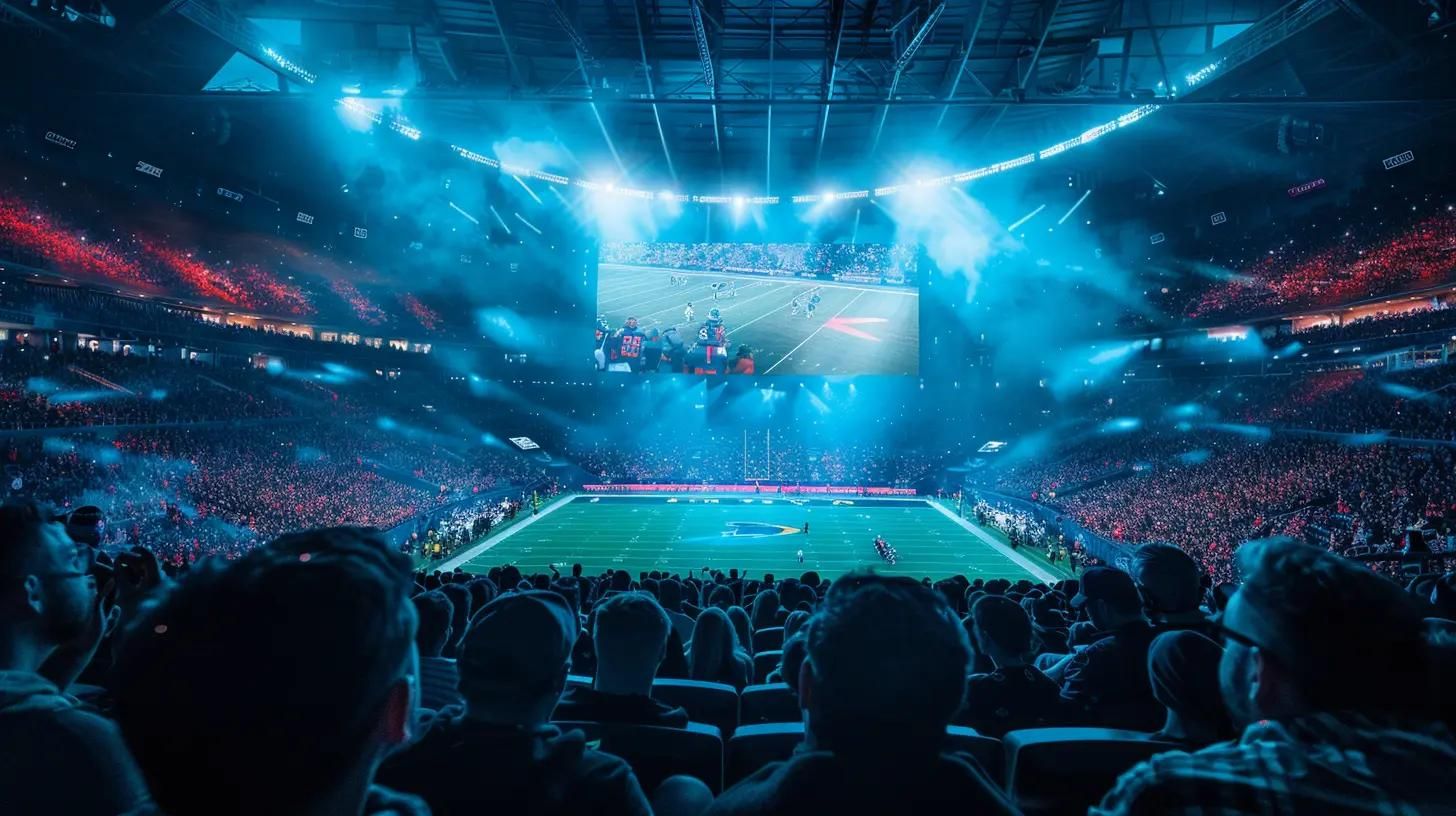
Picture a fan on the sofa on a Saturday with the match on. A broadcaster paid a fortune for those pictures. A sponsor's name is across the shirts. At half-time a bookmaker buys thirty seconds of the fan's attention. Three industries, and every one of them is paid for by that one person on the sofa.
I have spent most of my career where those three meet, and I wanted to put proper numbers on them: how big sport, media and betting really are, who pays whom, how much betting happens outside the rules and why so many countries still say no to it. The short version is that betting only exists because of sport, and it reaches most fans through the media that carries it. The longer version is below.

Three markets, one fan
Start with sport itself. Two Circles, which tracks the business of sport, put the revenue of the world's sports rights owners at a record $174 billion in 2025.1 Media is the engine. S&P Global puts what broadcasters and streamers will pay for sports rights in 2026 at $67 billion.2 The NFL alone takes about $10 billion a year from its TV partners,3 and the Premier League £1.7 billion a season from its UK deals before it sells a single overseas right.4 Sponsors add around $42 billion a year.5
All of it rests on the fan. FIFA says around five billion people engaged with the 2022 World Cup and close to 1.5 billion watched the final.6 The Premier League says 1.9 billion people follow it.7
Now betting. H2 Gambling Capital, the industry's main data house, puts what bookmakers keep from sports betting worldwide at $123 billion in 2025, and forecasts $186 billion by 2030.8 That is what bettors lose, not what they stake, and it is nearly twice what the whole world pays for sports media rights.
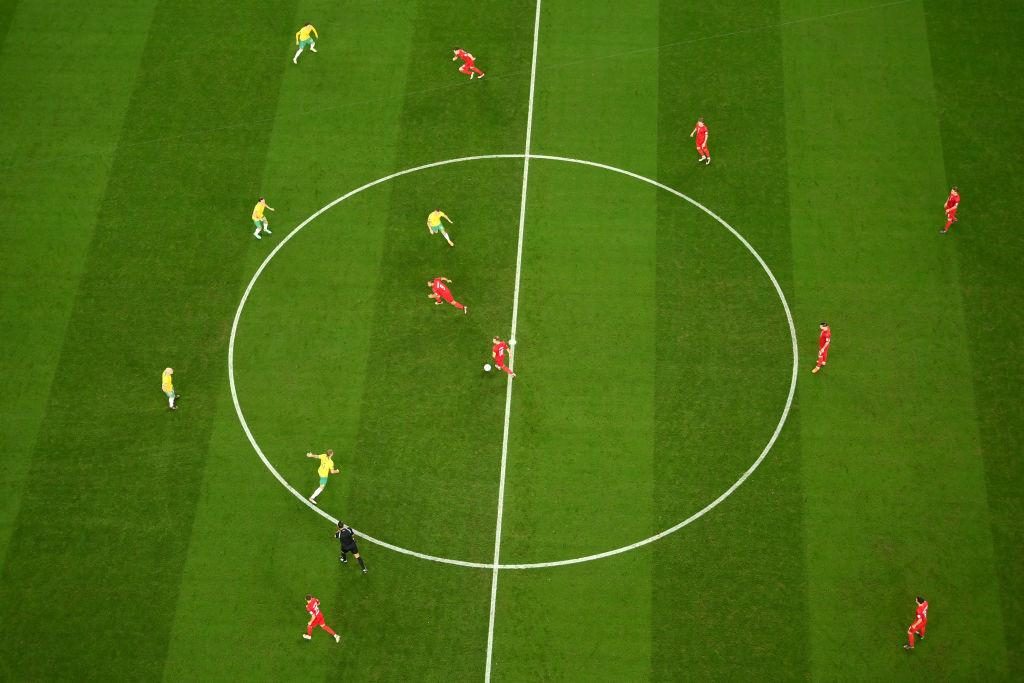
Every football match kicks off in the centre circle. Imagine these three businesses standing around it: sport, media and betting on the edge, and the fan in the middle, paying for all three with their time, their tickets and their stakes.
Betting depends on sport completely. No match, no market. Media is what turned it from a bet in the local shop into a global business: the pictures that make betting during the match possible, and the audience that makes the adverts worth buying.
Who owns the fan?
Sport creates the occasion, media brings the audience and bookmakers provide the bet. But when a fan decides to have one, the experience usually leaves the sport and the media brand that brought them there. The bookmaker takes over the relationship at the very moment it becomes commercially valuable: the account, the money, the data and every conversation that follows.
That is a strange arrangement when you think about it. The people who create the entertainment have sold access to their audience, rather than making betting part of the entertainment.
The money that comes back to sport is real. Before this season's ban, Premier League clubs earned about £101 million in a year from gambling brands on the front of their shirts.9 The NFL's sponsorship deals with three bookmakers were set to pay it close to $1 billion over five years.10 Sportradar, whose data sits behind bookmakers' prices, booked €404 million of sports rights costs in 2025.11 British racing gets a statutory levy of £109 million a year from bookmakers,12 and its racecourses shared another £113 million from their media and data rights in 2024.13
That money matters, and plenty of sport would struggle without it. But look at the shape of the deal. Sport sells betting the fan's attention, through the shirt, the board and the half-time advert, and leaves it at that. The bet itself happens somewhere else, with someone else, under someone else's rules. If it goes wrong, the problem lands on the fan, their family and in the end the state. Nobody planned it that way. But selling the attention and walking away does not solve anything. It just moves the problem from one person to another.
The market inside the rules
How much of this betting happens inside the rules? In sport, more than you might think. In a 2024 study for IBIA, the integrity body for licensed bookmakers, H2 put regulated sports betting, excluding racing, at $94 billion a year, and expected 83% of sports bets to be placed with bookmakers licensed in the bettor's own country, up from 63% in 2018.14 The rest would go to bookmakers licensed somewhere else. Both figures leave the black market out entirely. America is a big part of the change. Thirty-nine states and Washington DC now allow sports betting,15 and commercial bookmakers there kept $16.9 billion in 2025.16
The biggest regulated markets look like this. Some report what was kept and some what was staked, so the two are shown apart.
| Market | Latest figure | Year |
|---|---|---|
| What bookmakers, or the state, kept after paying out winnings | ||
| United States | $16.9bn, commercial bookmakers16 | 2025 |
| Great Britain | £2.4bn from online betting, plus £2.4bn in betting shops, about half of that from gaming machines17 | Year to March 2026 |
| Australia | A$8.5bn, racing and sport18 | 2024/25 |
| Italy | About €2.7bn, from €19.2bn staked on sport19 | 2025 |
| France | €1.8bn, from €11.5bn staked on sport online20 | 2025 |
| Brazil | R$37bn (about $7bn), betting and online casino, before the ban21 | 2025 |
| What bettors staked | ||
| Japan | ¥3.5tn (about $22bn) on JRA horse racing22 | 2025 |
| Hong Kong | HK$179bn (about $23bn) on football with the Jockey Club23 | Year to June 2026 |
| China | ¥278bn (about $39bn) on the state sports lottery's betting games24 | 2025 |
Two things stand out. Some of the biggest betting markets in the world have no private bookmakers at all. Japan's racing, Hong Kong's Jockey Club and China's sports lottery are monopolies, run by the state or licensed by it. And the list has just lost a member. Brazil's licensed market, betting and online casino together, kept about $7 billion in its first year. Less than two years after it opened, the government shut it by provisional measure, which Congress still has to confirm.
The market outside the rules
Then there is everything else. Nobody knows how big the illegal market is, and anyone who gives you an exact figure is guessing. In 2021 the UN Office on Drugs and Crime put the money staked on illegal betting at somewhere between $340 billion and $1.7 trillion a year.25, 26 The width of that range tells you how little anyone really knows.
The corners that are better measured tell you more. Across all online gambling, H2 estimates that 55% of the money people lost in 2024 went to companies not licensed where the player lives.27 Americans still bet about $84 billion a year with illegal bookmakers and offshore sites, around a quarter of the total, though that share is falling as legal betting spreads.28 In Japan, where betting is only legal on public races and lotteries, one study put bets on overseas sports sites at ¥6.45 trillion, about $44 billion, in a year.29
The Netherlands shows the catch. About 94% of Dutch people who gamble online do it only on licensed sites, but in the first half of 2026 those sites took only 59% of the money lost.30 The regulator's reading is that people who gamble illegally lose far more on average. France found the same thing: 79% of the illegal market's revenue there comes from people with a gambling problem.31 The black market is not where the casual fan goes. It is where the people who most need protecting end up.
Why so many countries say no
So why do so many countries still say no? Some for religious reasons. Many Muslim-majority countries prohibit gambling, following the Qur'an's instruction to shun it.32 Others keep it in the hands of the state. China bans gambling apart from two state lotteries.33 Its sports lottery sold ¥419 billion of tickets last year, about $59 billion, of which ¥278 billion was bets on matches.24 And in a lot of places there is a quieter reason underneath: a real nervousness about what gambling does to people.
Two of the biggest recent decisions say so out loud. India banned online money games outright in 2025, saying they encourage compulsive play and that heavy losses had led to depression and even suicide.34 Brazil shut its licensed market in September 2026, and the government's own explanation was that simply improving the existing rules would not be enough.35 The World Health Organization estimates that 1.2% of the world's adults have a gambling disorder.36
Here is my hunch, and it is only a hunch. I do not think most of these governments say no because they want people to have less fun. I think many of them cannot see a way to allow betting that properly protects people. Every model they look at seems to come with the same problems attached, so the safest answer looks like no. The trouble is that no does not stop everyone betting. Some people simply stop. Others carry on in a market with no protection at all.
Betting exists
because of sport.
It should live
there too.The idea
A different way to say yes
What if there were a way to allow betting with protection built in from the start, because it lived inside the sport rather than outside it? Not a casino with a football badge on it, but a small, fun bet on the match, inside the app of the team, the league or the broadcaster. In practice that means:
- A licensed bookmaker behind every bet, running the age, identity and, where the rules require them, financial checks, and keeping its own responsibilities to the customer.
- The money in plain sight. What the bet costs and what comes back are shown in pounds or dollars before anyone confirms. £10 gets back £35.
- A limit before the first bet, easy to find and instant to lower.
- Nothing hidden. No bet that quietly turns into fifteen, no offer with the catch buried in the small print.
- The sport stays the sport. The news, the scores and the analysis never depend on having a bet, and a fan can switch betting off and keep everything else.
It is not magic. A fan can still bet elsewhere, nobody in the sport sees every bet they place, and putting betting inside a sport does not make it safe on its own. What it does is make safer design possible, in a place the sport controls. For a regulator, that is something new: rules built into the screen rather than checked afterwards, run by an organisation that wants the same fans for thirty seasons. For a sport, betting becomes a service it shapes on its own terms rather than an advert it sells. For the fan, it is simpler, clearer and more fun.
It could give some governments a way to say yes where they say no today, and let others regulate differently. Countries are already looking. The United Arab Emirates, where gambling was long prohibited, licensed its first sports betting site this year, for residents over 21.37, 38
Then there is Brazil. Close your eyes and think of the kings of football, and you think of Brazil and Pelé. In a country that loves the game as much as any on earth, nobody can now legally place a fixed-odds bet on a match. A fun bet on the Seleção, inside the sport, instead of a product that turned out to be a double-edged sword, could work very well there.
The customers nobody serves
Think of a clothes shop. Some customers only ever buy in the sale. They wait until everything is 30% or 50% off, buy the bargains and disappear until the next one. No shop can live on them alone. It lives on its regulars, the people who come in, like what they see and pay a fair price because they enjoy it.
There is nothing wrong with a fan wanting a good price, and every price should be clear and fair. The problem starts when price and promotions become the only reasons to choose one bookmaker over another. Betting has drifted that way: similar markets, similar apps and an arms race of offers, all aimed at the people who already bet. Meanwhile the regulars it could be serving have hardly been asked in.
Three in four keen British sports fans told YouGov they had not had a bet with an online bookmaker in the past year.39 Some never will, and that is their choice. But among the rest are people who love their sport, are curious about a small bet and find the whole thing far more complicated than it needs to be. To have one, they would have to go to training camp to learn the jargon, the odds and the maths. Their answer to that is simple.
They have a point. The fault is not theirs. It is the product's.
The value of keeping the fan
Today a sports or media brand can attract millions of loyal fans, spend fortunes on the content they love and still receive only an advertising or acquisition fee when one of those fans decides to bet. The bookmaker then runs the betting relationship, controls the transaction and keeps the revenue that follows. The brand helped create the opportunity and shares very little of its continuing value.
It could work differently. Betting can become part of the media experience: the fan stays in the sports app they already chose, a licensed bookmaker provides the regulated betting service and the brand shares in the revenue that activity creates. That is a shift from selling advertising space to taking part in a revenue stream built around fans the brand already has.
It is a much bigger idea than putting a betting button beside a football score.
Back to the centre circle
Sport creates the moment. Media brings it to the fan. Betting makes money from it.
For years those three have worked alongside each other, each taking a different slice of the value. The fan has been passed between them, often without much thought about whether that arrangement makes sense.
It doesn't have to work that way. Sport can keep the relationship. Media can keep its audience. Licensed bookmakers can provide the betting. And the fan can have a simpler, more enjoyable experience, with clearer information and better protection.
There is an enormous amount of money around the game. The biggest opportunity is not finding new ways to sell the fan's attention. It is putting the fan in the centre circle and building everything else around them.
Betting exists because of sport. It should live there too.
Where Funteron fits
Funteron works in the centre circle. It puts betting inside the apps and sites of media brands and sports, working with licensed bookmakers, so the fan stays with the sport and the brand shares in the value. It sets no odds, holds no funds and accepts no bets. funteron.com
About the figures: market sizes come from different sources, years and measures. "Kept" means stakes minus winnings (gross gaming revenue); "staked" means the total bet. Several estimates come from industry-funded research, and estimates of illegal betting are uncertain by nature. Forecasts are forecasts, not outcomes. Dollar conversions are approximate. Facts were checked to 1 November 2026. 18+. Free support is available 24 hours a day from the National Gambling Helpline on 0808 8020 133.
Keith O'Loughlin is CEO of Funteron and former CEO of OpenBet. He chairs Christchurch Casino in New Zealand.